Europe
European Political Community Summit Convenes in Yerevan with Zelenskyy Among Attendees
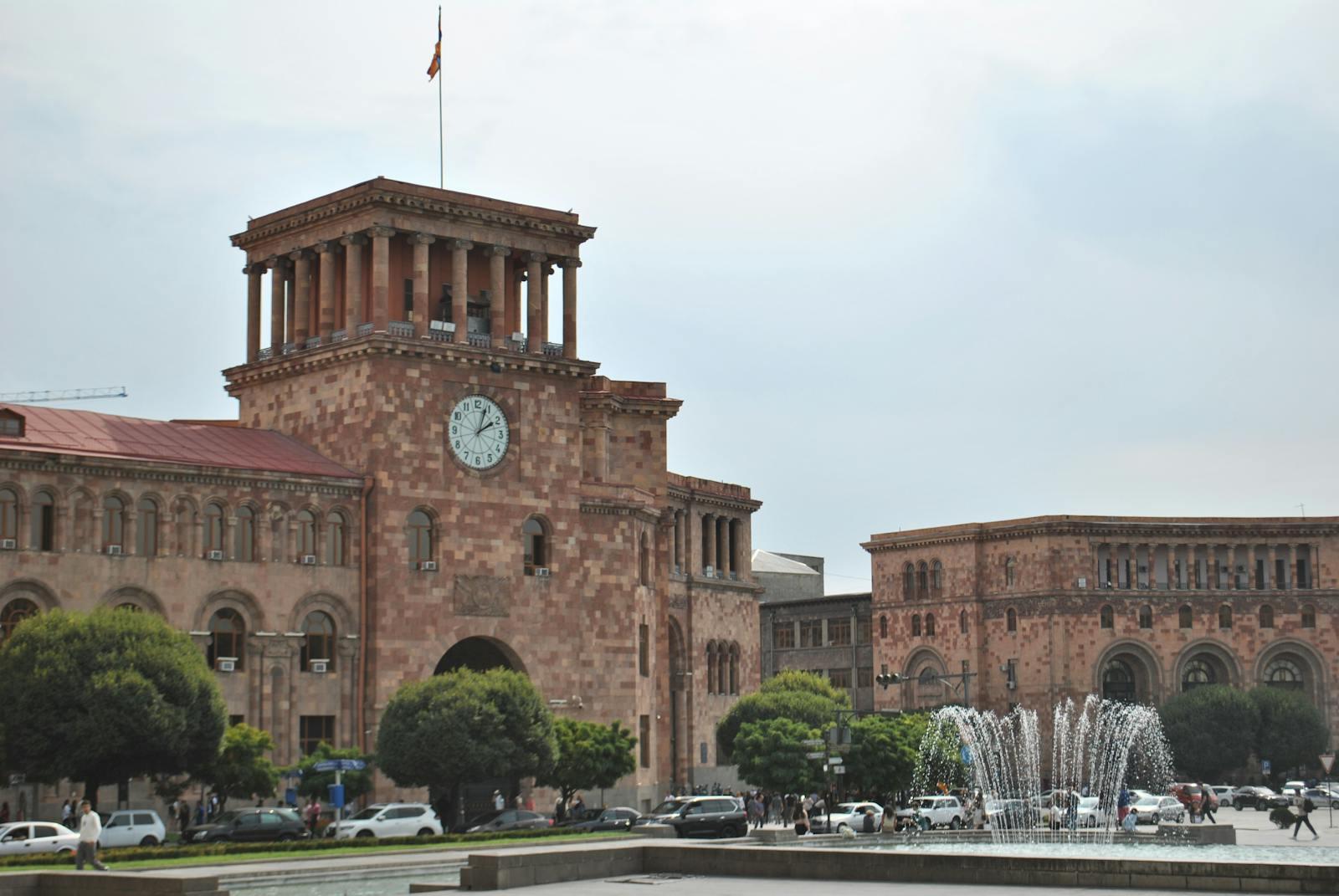
The European Political Community held its fifth summit in Yerevan on 4 May 2026, gathering EU member states, candidates and a wider European geography that includes the United Kingdom, Norway, Switzerland and the South Caucasus. The headline image of the day was Volodymyr Zelenskyy on the tarmac in Yerevan, shaking hands with Armenian Prime Minister Nikol Pashinyan — a presence that, by itself, marked a significant break with Yerevan's traditional Moscow alignment.
What the EPC is for
Founded in 2022 at France's initiative, the EPC was conceived as a flexible platform for dialogue across the European continent without the legal weight of EU institutions. It has no treaty, no secretariat and no binding output. Its value is precisely that lightness — it allows leaders who would otherwise not be in the same room to talk, and it gives candidate countries a venue where they are equal participants rather than supplicants.
What was on the table in Yerevan
Three big files. Russian aggression and how Europe finances continued support to Ukraine. Migration and the southern Mediterranean route. And — the most procedurally sensitive item — a discussion among EU ambassadors over a possible mutual defence clause for non-NATO European partners, in light of US troop drawdowns and uncertainty about NATO's Article 5 reliability.
Azerbaijan's delegation clashed openly with the European Parliament's representation over a draft text on Nagorno-Karabakh and the status of Armenian cultural heritage. The choreography spilled into the corridor and was visible on local television. The EPC's lack of binding outputs absorbed the friction; in any other forum it would have produced a procedural rupture.
Why hosting in Armenia matters
For Yerevan, the summit was a deliberate act of repositioning. Armenia has spent the past two years drifting away from the Collective Security Treaty Organization — Russia's NATO equivalent — and toward a more European posture. Hosting the EPC, and welcoming Zelenskyy, is the most public step yet. Moscow has not formally retaliated but the signalling has been sharp.
What it produced
No communique. By design. What it produced were bilateral conversations: a Macron-Pashinyan exchange on EU candidacy support, a Starmer-Zelenskyy session on UK air-defence assistance, and what diplomatic readouts described as a "frank" Tusk-Aliyev meeting on Azerbaijan's posture. The EPC's measure of success is that the meetings happened. By that measure, Yerevan delivered.
Frequently asked
- What is the EPC?
- A 2022-founded flexible dialogue platform for European leaders, broader than the EU and without binding outputs.
- Why does Armenia matter here?
- Yerevan is repositioning away from the Russia-led CSTO and toward a more European political stance; hosting the EPC was a deliberate signal.
- Did the summit produce decisions?
- No communique by design. Its value is the bilateral conversations it enables.
Around Europe
A look at recent reporting on europe from the Étude newsroom.
Related by topic
Other Étude stories tagged with the same topics as this article.
More in Europe



Trending at Étude
Semiconductors Apple Raises Mac and iPad Prices, Blaming the AI Memory Crunch
Wages and purchasing power Luxembourg's next wage-indexation tranche forecast for June 2026, pending official index data
Somalia Somalia Prepares First Offshore Oil Drilling After Decades of Delays
NATO Summit NATO opens Ankara summit hours after deadly Russian strike on Kyiv